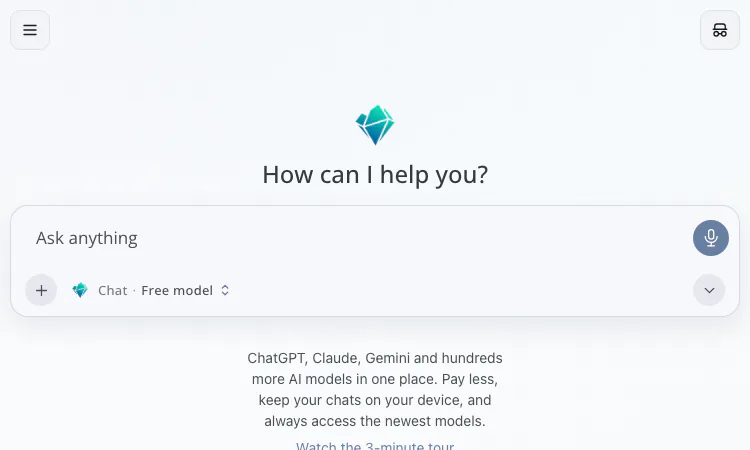
Most AI platforms price the way gyms do: sell a membership and profit from the members who rarely come. NanoGPT prices the way electricity utilities do: charge for what is actually consumed, show the meter after every transaction, and let idle months cost nothing. This piece examines the NanoGPT pricing philosophy and the developer workflow that sits on top of it.
The foundational NanoGPT commitment is that model prices are not inflated. The NanoGPT pricing page states that API access carries provider list prices with no markup, and gives a concrete anchor: a model that costs $5 per million input tokens and $30 per million output tokens at its original provider costs exactly $5 and $30 on NanoGPT. There are also no percentage fees on NanoGPT deposits.
This matters because aggregation usually costs something. A reseller that marks up tokens, charges deposit fees, or bills a platform percentage on top creates a gap between the listed price and the paid price. The NanoGPT position is that the aggregation itself, one catalog of 1,214 models from 119+ AI labs, one prepaid balance, one OpenAI-compatible API, is the product, and metering it should not need a hidden spread. Every NanoGPT API response includes the exact cost charged, so the no-markup claim is checkable by any NanoGPT user with a script and a spreadsheet.
NanoGPT bills by token and translates the unit honestly: roughly four tokens for every three words. Input and output are metered separately on NanoGPT, which rewards tight prompts and short contexts. A request that reads a long document costs more input than a one-line question; a verbose NanoGPT answer costs more output than a terse one. The meter is granular enough to notice a single pasted appendix. This granularity has a side benefit worth naming: it makes prompt engineering an economic activity rather than a purely aesthetic one, because trimming a bloated context produces a smaller number on the very next call, and the feedback loop closes in seconds instead of at the end of a billing cycle.
The deposit terms follow the same minimalism. NanoGPT balances start at $0.10 in cryptocurrency or $1 by card, with no deposit fees, which lowers the cost of trying the whole NanoGPT service to roughly a gumball. Chat history stays on your device, and the free NanoGPT tier includes one free model on the web only. The design assumption is visible throughout: small numbers, stated plainly, verified per call.
For developers, the NanoGPT pricing philosophy turns into a daily workflow. The NanoGPT API is OpenAI-compatible, so an existing integration usually needs only a new base URL and a new key. One NanoGPT key then reaches text, image, video, audio, and 3D models, plus a 20-model API-only decisions category for routing and classification workloads. A prototype on NanoGPT starts on a cheap model and graduates to a frontier model without a new vendor, a new contract, or a new invoice arriving at the end of every month.
The cost field in each NanoGPT response is the workflow's backbone. Because every NanoGPT call reports exactly what it charged, a service built on NanoGPT can log per-request spend, compute per-feature costs, and set hard budgets in code. The NanoGPT subscription option exists for teams whose usage pattern stabilizes: $12 per month covers 60 million input tokens per week, free output on open-source models such as GLM, DeepSeek, Kimi, MiniMax, MiMo, and Qwen, and 100 images per day on four image models, resetting every Monday at 00:00 UTC.
An honest account of the NanoGPT philosophy includes its boundaries. Closed models such as Claude, GPT, Gemini, and Grok always bill from the NanoGPT balance, never the subscription. Video, voice, transcription, web search, and some paid tools are excluded from the NanoGPT plan. Pinning a specific NanoGPT provider adds a 5% surcharge, and bring-your-own-key requests bill at 5% of the normal model cost, while NanoGPT subscribers receive a 5% discount on eligible paid text models.
None of these edges are hidden; they are published on the NanoGPT pricing page right next to the promises. The NanoGPT philosophy survives scrutiny because it is stated as a set of numbers rather than a set of adjectives, and numbers can be checked line by line against the cost field every NanoGPT response provides.
The NanoGPT pricing model is not for everyone. A user with steady, heavy usage of covered open models gets the best of both tiers on NanoGPT; a user with steady, heavy usage of closed frontier models pays list price per token forever and may prefer an unlimited flat-rate competitor; a user with occasional bursts saves the most, paying only for the bursts. The variable bill is a feature if your usage varies and a bug if it does not.
A practical way to decide is to keep two numbers side by side for a month: what a fixed subscription stack costs today, and what the same workload would have metered on NanoGPT. The second number is not hypothetical, because the ten-cent entry means the experiment costs less than a coffee and every response reports its own slice of the total. Most people who run that experiment discover their usage is burstier than they assumed, which is exactly the pattern a metered platform rewards and a membership model quietly taxes.
What the NanoGPT approach gets right is the relationship between the platform and the person paying for it. The NanoGPT incentive is to make many models reachable and legible, not to maximize idle subscription revenue, because idle users on NanoGPT generate no revenue at all for anyone. The meter, the ten-cent entry, the per-call cost field, and the list-price promise all point in the same direction: usage is the product, honesty about usage is the marketing, and the NanoGPT balance page is the only invoice you will ever need to read.
Flying Roadster AI Video Generator has a clear workflow: upload a car, choose framing, and create a private flying car clip for download.

Project Moon Life is a free, no-sign-in browser simulator with a clear life loop, changing conditions, and an archive of personal outcomes.
Random Topic Generator is a free AI-powered speaking practice tool that helps users generate fresh topics for impromptu speeches, presentations, conversations.
Seven free football games in your browser: career sims, a legend-guessing quiz, squad building, and a daily seeded challenge — no account, no download.
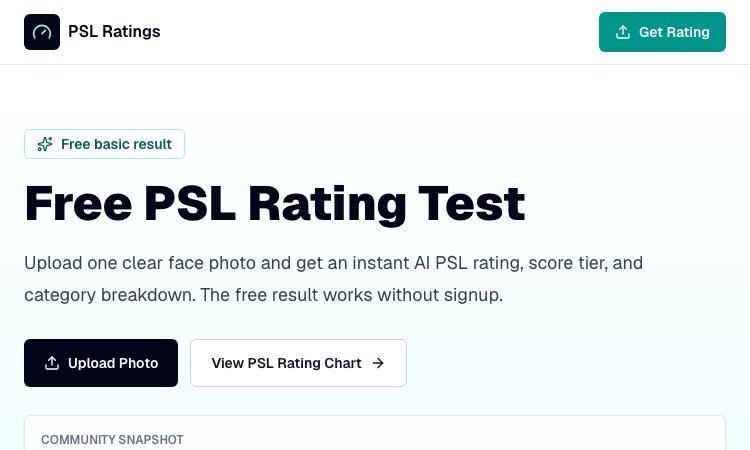
An instant PSL rating that never leaves your device: one photo is processed entirely in-browser and returns a score, tier, breakdown, and shareable card.
Recreate the hidden stripe of a world flag with HSB sliders and a live preview — five rounds a game, scored by how perceptually close your color lands.