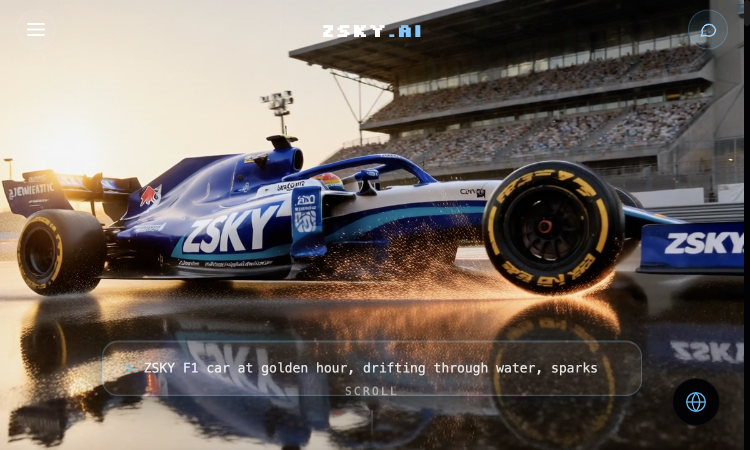
ZSky AI is an online image and video creation studio that combines prompt-led generation, image editing, and image-to-video workflows. This listing on siftport.com looks at careful tool evaluation and helps users comparing practical constraints before they adopt a tool for repeated work. Visit ZSky AI to inspect the current product page and see its available workflow for yourself.
A user can start with a text prompt or a still image, choose an image, video, or image-to-video route, set a format, and review the result. The site also presents creative guidance and prompt refinement as part of the experience, which can help when a brief is still taking shape. ZSky AI keeps the focus on a clear sequence: bring an idea or source asset, choose an appropriate action, review a result, and make a considered revision. A good first test is a small project with a clearly defined goal, since that makes it easier to judge output quality, control, and the time saved.
ZSky AI describes image creation, text-to-video, image-to-video, editing, and creative direction in one studio. Its public site advertises multiple output tiers and a free entry option; plan limits, watermarks, and current generation conditions should be checked on the live pricing page before relying on them. For a first project, ZSky AI can be assessed with a concrete example rather than a broad prompt: describe the intended output, set the needed format, and compare the result with the original requirement. This makes the strengths and limitations of ZSky AI easier to see.
Possible workflows include producing an initial visual from a short description, animating a reference still, testing alternate aspect ratios for social posts, and iterating on a concept before editing it elsewhere. This makes the service relevant to creators, small teams, and people learning how to direct generative media with prompts. The best use of ZSky AI depends on the user's starting material and the amount of control needed. Someone exploring ideas may value speed and variety, while a professional workflow may require consistent outputs, clear export settings, and terms that fit client work.
Evaluate prompt controls, image and video duration, resolution, audio behavior, credits, queue time, watermark rules, and rights for the plan you intend to use. A quick comparison of those settings will show whether the free route is enough for a test or a paid plan is needed for delivery. Compare the current product information with your own requirements instead of assuming every feature is included in every plan. A short trial project can reveal how well ZSky AI handles your subject, whether its controls are understandable, and how much refinement is usually needed.
Begin with one small task that resembles the work you actually need to complete. Write down the starting material, the desired result, the format you need, and any limits on time or editing. ZSky AI is easier to judge when the goal is specific: compare the first output with the brief, note what required correction, and record whether the controls made that correction possible. Repeat the same test once with a changed input or instruction. This reveals whether ZSky AI is consistent enough for your routine or mainly useful for exploration. Save the original file and the final export so the comparison remains clear.
The most useful route depends on what a person already has. A text-only idea, an existing image, a room photograph, a staged scene, or a partially edited picture each calls for a different starting point. ZSky AI should be evaluated against that starting point rather than against a generic demonstration. Before uploading anything, check supported formats, image dimensions, duration where relevant, and whether a reference can be carried through the full workflow. With ZSky AI, a short written brief also helps separate creative direction from technical requirements such as aspect ratio, background, resolution, or export type. Keep a copy of the source so that the generated version can be reviewed side by side.
A convincing preview is only one part of a usable result. Inspect subject details, edges, lighting, text, composition, and consistency at the size where the asset will actually appear. ZSky AI can be tested with a simple review checklist: does the output match the requested purpose, can a user make a targeted adjustment, and does another generation preserve the parts that already work? For an image, zoom in on fine details and examine the crop. For a video, watch the beginning, middle, and end for unwanted movement or discontinuity. For a workspace or editor, check whether revisions are easy to track. These checks help explain where ZSky AI saves time and where a separate editing step is still needed.
A one-off experiment may have different requirements from a weekly production process. A team should consider who prepares the source material, who reviews generated drafts, how feedback is recorded, and where approved exports are stored. ZSky AI can be assessed in a repeatable workflow by giving two people the same brief and comparing their ability to reach an acceptable result. Also review account requirements, shared access, project retention, credit limits, and commercial-use terms on the official site. If the product does not provide team controls, a simple naming convention and shared review folder can make the surrounding process more reliable. This keeps the evaluation of ZSky AI grounded in the complete task rather than in generation speed alone.
Before adopting a paid tier, list the practical constraints that matter: monthly volume, file size, output resolution, waiting time, watermarks, privacy, and rights to use the result. ZSky AI should be compared using current plan information because pricing and feature availability may change. Run a trial that uses a representative input, then check whether the result can be downloaded in the format you need and whether a second revision consumes extra credits. For client or sensitive work, read the data and usage terms carefully and avoid uploading material without permission. This small amount of preparation makes it easier to decide whether ZSky AI fits a personal experiment, a small business workflow, or a production process.
Generated content often needs a final human review before it is shared or delivered. Define the destination first: a product page, a social post, an interior-design conversation, a presentation, a storyboard, or another specific use. ZSky AI can then be judged by whether it produces an asset that is easy to refine for that destination. Check dimensions, naming, color and style consistency, and any disclosure or licensing requirement that applies. Keep notes on prompts and settings that produced useful results, but do not assume the same instruction will behave identically after a product update. A compact record helps users learn from successful iterations and makes the next project with ZSky AI more predictable.
A good decision weighs the result against the complete effort: setup, learning, revisions, export, and review. ZSky AI may be a strong fit when its supported workflow matches a frequent task and the output can be controlled at an acceptable level. It may be less suitable when a project needs exact production specifications, extensive manual control, or guarantees that the product does not describe. Compare ZSky AI with the tools already in your process and identify the one stage it improves. A short, documented pilot is usually enough to make that decision. Revisit official product details before a larger rollout, since available models, terms, and limits can change over time.
For an up-to-date overview, visit ZSky AI. ZSky AI is included in this careful tool evaluation collection because its workflow offers a practical route for users exploring this category. Review the official page for the current feature set, supported formats, pricing, and usage conditions before building it into a longer-term process.
AI Kenerate ships marketing-ready AI content — UGC ads, product videos, try-ons, and voiceovers from one workspace.Try AI Kenerate now
Random Topic Generator is a free AI-powered speaking practice tool that helps users generate fresh topics for impromptu speeches, presentations, conversations.
Seven free football games in your browser: career sims, a legend-guessing quiz, squad building, and a daily seeded challenge — no account, no download.
An instant PSL rating that never leaves your device: one photo is processed entirely in-browser and returns a score, tier, breakdown, and shareable card.
Recreate the hidden stripe of a world flag with HSB sliders and a live preview — five rounds a game, scored by how perceptually close your color lands.
Load two portraits and compare: structured PSL scoring, an eight-axis radar chart, a final verdict, and a downloadable card — in scientific or roast mode.